Your personal values — your core values — are the few things that matter most to you. Name them, and VoiceFirstPlanner keeps every task, goal and habit pointed at them.
Everything on the list got done. The important thing didn’t — it never made the list. It rarely does, because the urgent shouts and the important waits quietly. The list keeps growing and nothing in it tells you which three things actually matter, so you do the loud ones, and the day ends busy and hollow.
Personal values are the principles that matter most to you — honesty, family, health, freedom, craftsmanship. They are not goals: nothing ever ticks them off. They are the direction a life keeps choosing, and the reason one task earns its place and another does not.
Core values are simply the handful at the top — the few you would keep if you had to let the rest go. Three to five works well. A definition is easy; the useful part is knowing which ones are yours.
Read slowly and notice which words land, even slightly. These are core values examples — the list from our Values workbook.
A simple values exercise — a self-assessment, not a test with a score. Four steps, about four minutes.


The full chapter is in the Instruction Manual — free with any account.


Pick your personal values from the list, or say them. Then name the roles you actually hold — parent, builder, friend — and what doing each one well looks like.
From then on, every goal you set can point at one of them. When a task earns its place, you know why. When it doesn’t, that’s easier to see too.
Think of it as a value planner: name them once, and every goal you set can point at one.
It’s on the list — and every goal you set from here can point at it.
Tapping is the easier way to start. Both work.
Five values on the free plan, and the pages are all there from the start.
Goals rooted in your own values drew more sustained effort and were reached more often — and reaching them genuinely improved well-being. Borrowed goals didn’t.
This is why Life Planning opens with values before it ever asks for a goal. The same achievement pays out completely differently depending on whose goal it was.
You can run the half-marathon. You never finish being healthy.
That’s the whole difference, and it’s worth ten seconds because it’s where most planning goes wrong: people write down goals they never chose and wonder why arriving felt like nothing.
Get the value right and the goals almost choose themselves.
I ran a paper planner for thirty-five years and it never once asked me why. It held the appointments and the lists and it did that well. But the question underneath — is this the day I meant to have — that one I had to keep asking myself.
This is the part I wish I’d had.
— Dave Rees, Founder. From boatbuilder, to business owner, to Founder.
The Values workbook takes the exercise further — the forty-word scan, the narrowing, and how to line your days up behind what you chose.
The principles that matter most to you — honesty, family, health, freedom. They give a life its direction and decide which tasks earn their place.
Core values are your top few personal values — the ones you would keep if you had to let the rest go.
Three to five works well. More than about seven and they stop guiding anything.
Honesty, integrity, courage, family, health, freedom, creativity, service, presence and simplicity are common examples. The full list of forty is on this page.
Free account. No card, no clock. Start with your values, and your daily planner follows.
Start freeMore of Life Planning
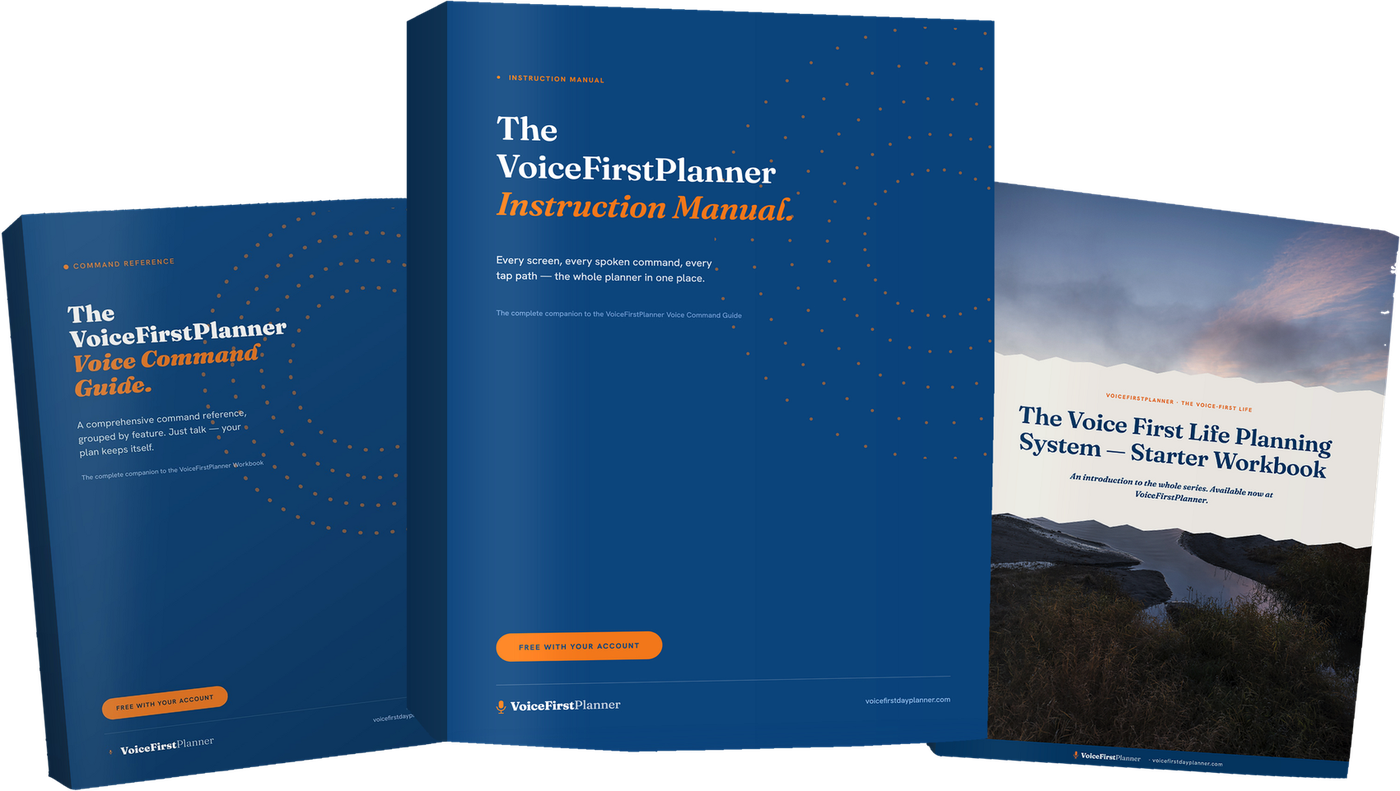
The VoiceFirstPlanner Instruction Manual, The VoiceFirstPlanner Voice Command Guide and The Voice First Life Planning System — Starter Workbook.
$19.98 for the Starter Workbook alone — all three free when you create your free account.